With their magnificent horns and thick, shaggy coats, Highland cows look like they belong in a prehistoric landscape or a high-fantasy novel. Because they appear so rugged and “wild,” many people assume they require a specialized, exotic diet. However, if you are wondering what Highland cows eat, the answer is rooted in their history as one of the hardiest and most efficient foragers in the world.
The simple answer is that Highland cows eat grass, hay, and various types of rough forage like shrubs and brush. They are ruminants, meaning they have a complex four-compartment stomach designed to break down tough plant cellulose into energy.
But while their diet sounds simple, there is a science to feeding these animals correctly—especially if you want to maintain that iconic fluffy coat and ensure a long, healthy life. In this comprehensive guide, we will break down the Highland cow diet, from seasonal grazing habits to essential mineral requirements.
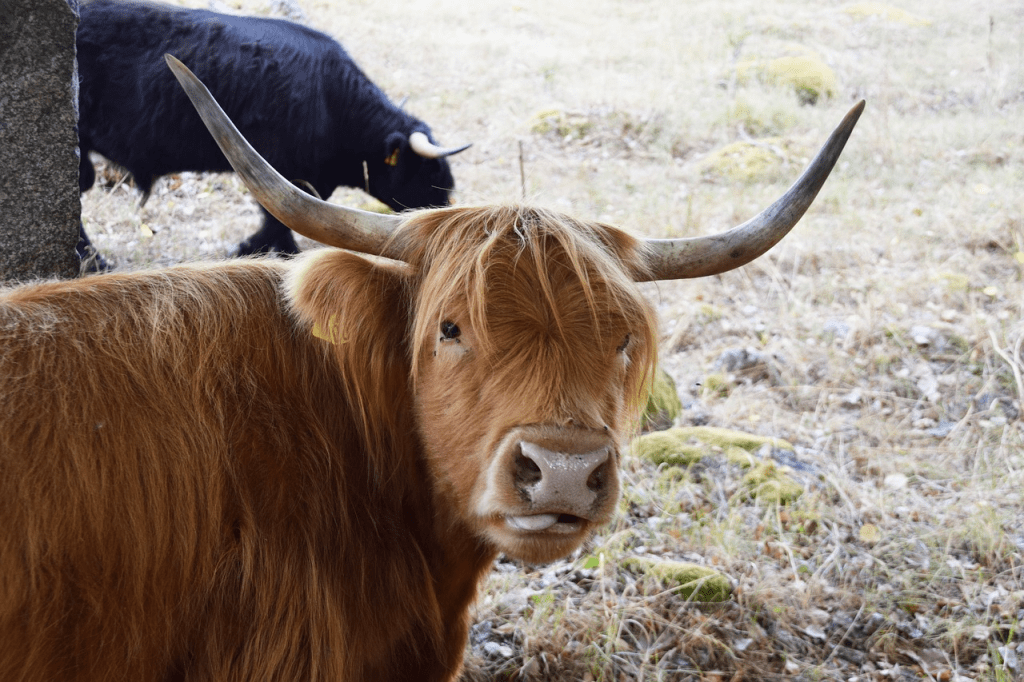
What Do Highland Cows Eat?
Highland cattle are widely considered “low-maintenance” grazers, but this doesn’t mean they don’t have specific nutritional needs. A healthy Highland cattle diet is primarily composed of fiber. Unlike commercial breeds like the Angus or Hereford, which have been bred to thrive on high-energy corn and soy in feedlots, Highlands are “thrifty” eaters.
In their native Scotland, they survived on the “poor” land of the Highlands, where lush grass was a luxury and tough heather and gorse were the norm. This evolutionary history has given them a unique digestive efficiency. They can extract nutrition from plants that other cattle would simply ignore or starve on.
The Core Components of Their Diet:
- Pasture Grass: The foundation of their diet during the growing season.
- Hay: Dried grass provided when fresh pasture is unavailable.
- Forage/Browse: Woody plants, weeds, and shrubs.
- Minerals: Vital micronutrients often provided via salt licks or loose minerals.
The Natural Diet of Highland Cows
To understand what do Highland cattle eat, you have to look at how they interact with the land. They are not “picky” eaters. In fact, they are often used in conservation grazing because they improve the biodiversity of the land by eating invasive weeds and woody plants.
Grass and Pasture
When people ask what do Highland cows graze on, the answer is almost any type of grass. They enjoy timothy, clover, fescue, and orchard grass. However, they don’t require the high-protein clover pastures that dairy cows need. They are perfectly happy on native, unimproved grasses.
Shrubs and Rough Vegetation
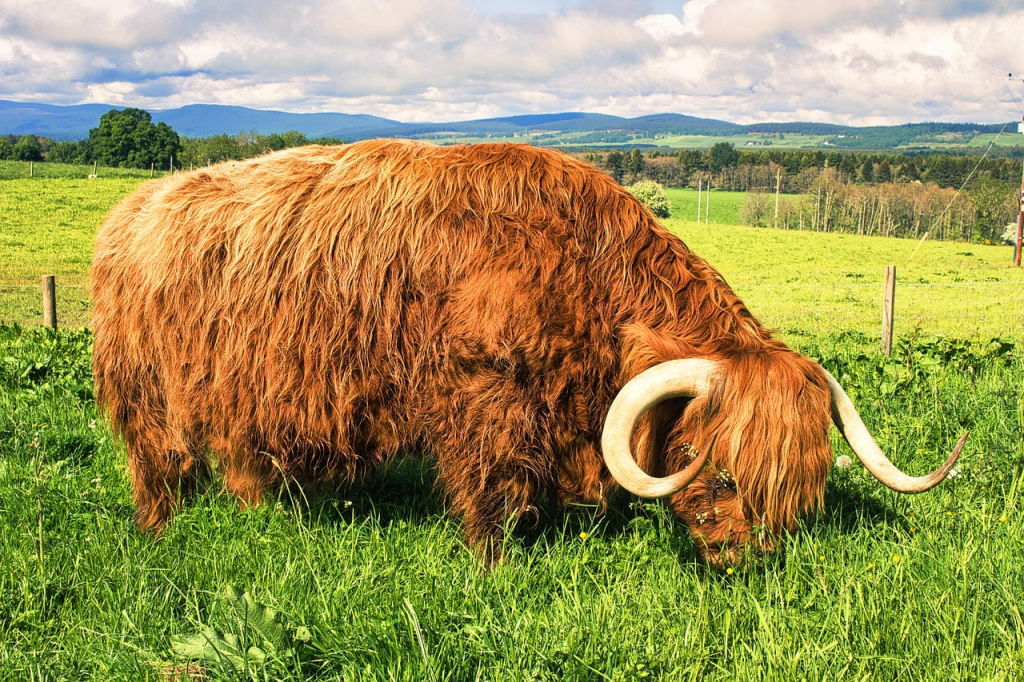
Highlands are often described as being “part-goat” because of their willingness to browse. While most cattle only eat what is at their feet, Highlands will use their massive horns to knock down tall brush so they can reach the leaves. They will eat willow, birch, thistle, and even blackberry brambles. According to the American Highland Cattle Association, this ability to utilize marginal land is one of their greatest economic advantages.
Hay (The Winter Staple)
When the grass stops growing, hay becomes the primary source of nutrition. Because they have a slower metabolism than many modern breeds, they can maintain their weight on average-quality hay, though first-cut grass hay is generally preferred over straw or overly stalky stalks.
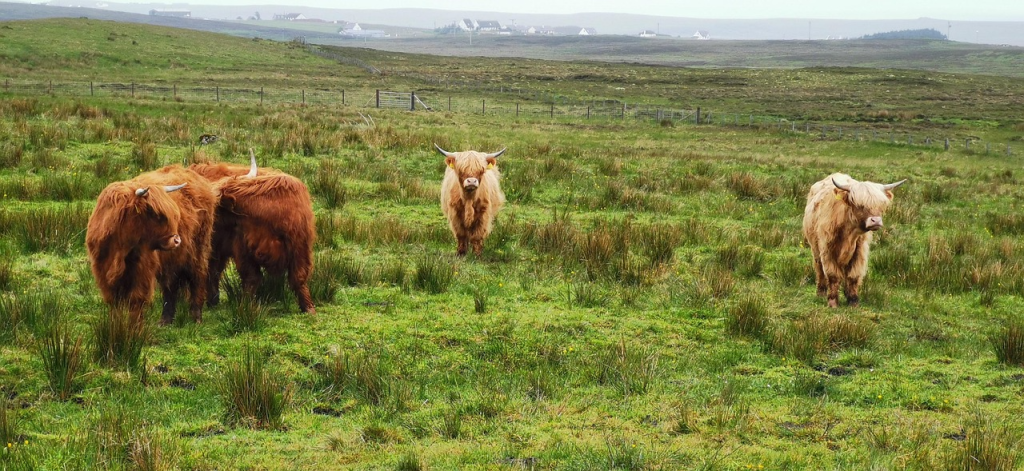
What Do Highland Cows Eat in Winter?
Winter is where the Highland cow truly shines. Their double-layered coat provides such incredible insulation that they don’t have to burn as many calories just to stay warm compared to short-haired breeds.
Hay and Stored Feed
During the winter months, a Highland cow will consume roughly 2% to 2.5% of its body weight in dry matter (hay) per day. If a cow weighs 1,000 pounds, she will need about 20–25 pounds of hay daily. Providing high-quality fiber is essential because the fermentation process in their rumen actually generates the internal heat that keeps them warm.
Reduced Pasture and “Stockpiled” Forage
Many owners practice stockpiling, which involves leaving certain pastures ungrazed in the late summer so the cattle can graze the standing dry grass under the snow. This is a very natural way of feeding Highland cows and mimics their ancestral lifestyle.
Do Highland Cows Need Grain or Supplements?
A common mistake new owners make is treating a Highland cow like a pet dog and over-supplementing with grain. In most cases, Highland cows do not need grain.
When Grain is Used
Grain (like corn, oats, or barley) is “hot” feed—it is very high in energy and sugar. It should only be used in specific circumstances:
- Weaning Calves: To give them a nutritional boost during a stressful transition.
- Lactating Cows: To help a mother keep her weight up while nursing a large calf.
- Winter Recovery: If an animal has lost significant body condition during a particularly brutal winter.
Minerals and Salt
Even on perfect pasture, soil is often deficient in certain minerals like selenium, copper, or zinc. Providing a free-choice mineral block or loose mineral mix is non-negotiable. Research emphasizes that mineral deficiencies can lead to poor coat quality, reproductive issues, and weakened hooves.
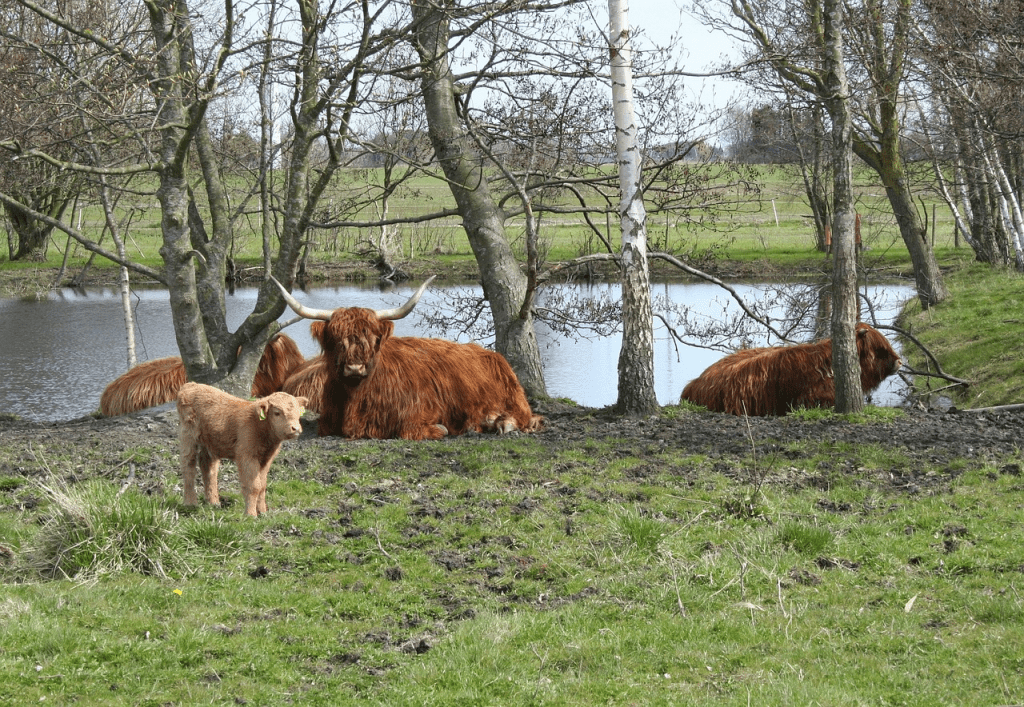
How Much Do Highland Cows Eat Per Day?
Understanding the volume of the Highland cow diet is vital for planning your hay budget and pasture size.
Typical Intake
As a rule of thumb, an adult Highland cow will eat:
- Summer: About 25–30 pounds of fresh grass per day (if grazing).
- Winter: Roughly 2.5% of their body weight in hay.
Factors Affecting Consumption
- Size: A 1,200-pound bull will naturally eat more than an 800-pound heifer.
- Pregnancy: A cow in her third trimester will have a 10–20% higher caloric requirement.
- Weather: In extreme cold, they may increase their hay intake to stay warm.
Why Highland Cows Are Efficient Grazers
One of the reasons the Highland breed is gaining popularity worldwide is its feed efficiency. They are the ultimate up-cyclers.
Ability to Thrive on Rough Land
While a grain-fed commercial cow might struggle on a rocky, brush-heavy hillside, the Highland cow sees it as a buffet. Their digestive tracts are longer than many other breeds, allowing them more time to break down tough, fibrous plant matter.
Lower Feed Requirements
Because they are generally smaller and slower-growing than commercial beef breeds, their overall maintenance requirement is lower. This makes them ideal for small farms or homesteaders who don’t have hundreds of acres of prime flatland.
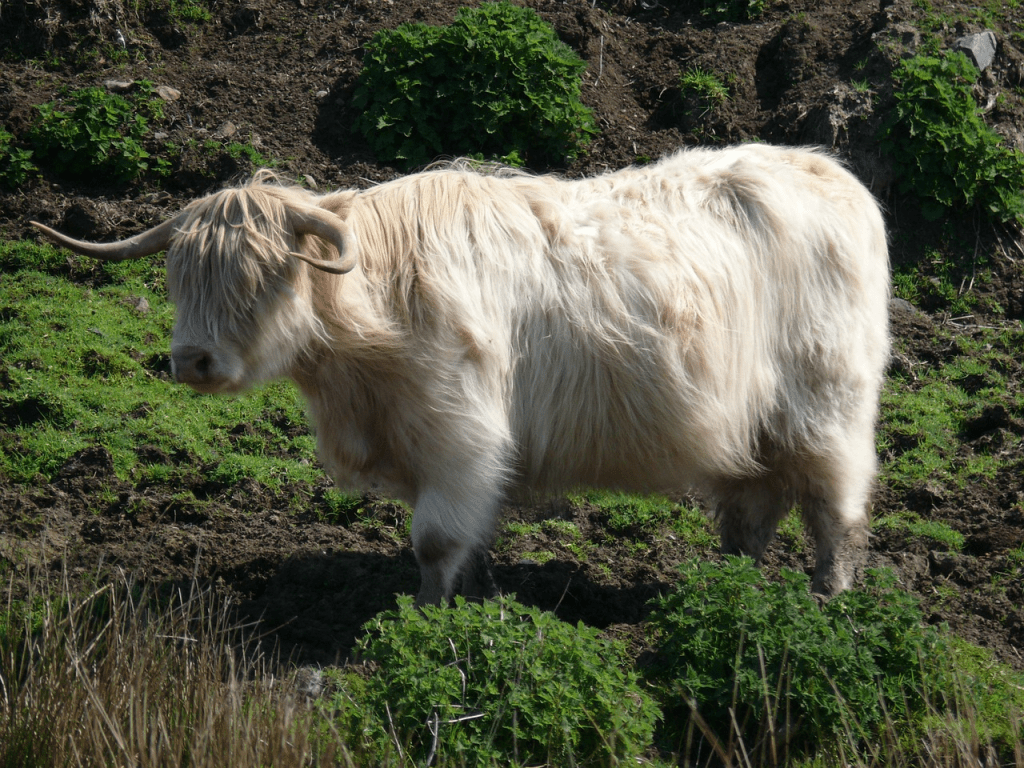
Feeding Highland Cows on a Farm: Practical Tips
If you are bringing these animals home, you need a plan for feeding Highland cows that protects both the animals and your land.
Pasture Management
To keep your grass healthy, avoid overgrazing. If the grass is shorter than 3 inches, it’s time to move the cows. Overgrazed pasture allows weeds to take over and exposes the cattle to more soil-borne parasites.
Rotational Grazing
This is the “gold standard” of feeding. By dividing your land into smaller paddocks and moving the cows every few days, you ensure they always have fresh, high-protein tips of grass to eat, while the rest of the land has time to recover. The USDA Natural Resources Conservation Service provides excellent frameworks for setting up rotational grazing systems that maximize forage production.
Foods to Avoid Feeding Highland Cows
Just because they can eat almost anything doesn’t mean they should.
- Lawn Clippings: Never feed fresh lawn clippings. They ferment too quickly and can cause bloat, which is a life-threatening buildup of gas in the rumen.
- Garden Plants: Many common garden flowers like Oleander, Azaleas, and Rhododendrons are highly toxic to cattle.
- Excessive Fruit/Vegetables: While a few carrots or apples are fine as treats, too much sugar can disrupt the pH balance of their rumen.
- Moldy Hay: Mold can contain mycotoxins that cause respiratory issues or even abortions in pregnant cows.
Water Needs for Highland Cows
Water is arguably the most important part of the Highland cow diet. A cow that doesn’t drink won’t eat.
- Volume: An adult Highland can drink between 10 and 30 gallons of water per day, depending on the temperature.
- Freshness: They are surprisingly clean animals. If their water tank is full of algae or manure, they will drink less, leading to dehydration and poor digestion.
- Winter Access: In freezing climates, you must use tank heaters. While Highlands can eat snow for hydration in an emergency, it is inefficient and forces them to burn body fat to melt the snow internally.
Feeding Highland Calves
The diet of a calf is a staged process.
- Colostrum: Within the first 2 hours of life, the calf must drink the mother’s first milk, which is packed with antibodies.
- Milk Phase: For the first 3–4 months, their primary nutrition comes from nursing.
- Introduction to Forage: By 2 weeks old, you will see calves nibbling on grass or hay alongside their mothers. This mimicry helps develop their rumen.
- Weaning: Usually occurring between 6 and 8 months, at which point they transition entirely to a grass and hay diet.
Common Feeding Mistakes to Avoid
1. Overfeeding Grain
The biggest mistake is trying to bulk them up with grain. This often results in fatty liver or a cow that is too fat to calve safely. A fat Highland is an unhealthy Highland.
2. Ignoring Minerals
Many owners think grass is enough. Without a balanced mineral program, you will see dull coats, cracked hooves, and winter tetany (magnesium deficiency).
3. Poor Water Quality
Stagnant pond water is a breeding ground for bacteria and parasites. Always provide a clean, dedicated water source.
Pros and Cons of the Highland Cow Diet
| Pros | Cons |
| Thrive on marginal land | Slow Growth |
| Natural Weed Control | Horn Interference |
| Efficient Digestion | Mineral Sensitive |
| Easy Foragers | Overgrazing Risk |
Final Thoughts on Feeding Your Folds
So, what do Highland cows eat? They eat a diet that is as rugged and uncomplicated as the hills they come from. By focusing on high-quality forage, clean water, and a solid mineral program, you can ensure your shaggy companions thrive for 20 years or more.
Whether you are keeping them for beef, as “lawn mowers,” or simply as beautiful pasture ornaments, the key is to respect their biology. They are designed by nature to be efficient, grass-fed machines. Feed them like the Scottish legends they are, and they will reward you with health, fluff, and those iconic, majestic horns.
FAQs
Do Highland cows only eat grass?
No. While grass is their primary food source, they also browse on shrubs, trees, and weeds. In winter, they rely heavily on hay.
Do Highland cows need grain?
Generally, no. Most Highlands do best on a 100% forage diet. Grain is typically only used for weaning calves or thin cows in extreme winter conditions.
How much do Highland cows eat per day?
An adult eats approximately 2% to 2.5% of its body weight in dry matter (hay) daily, or roughly 25–30 pounds of fresh pasture.
What do Highland calves eat?
Calves begin with milk (colostrum and then standard milk) from their mothers. Within weeks, they start nibbling on grass and hay, transitioning to a full forage diet by 6–8 months.
Can Highland cows eat vegetables?
Yes, in moderation. They enjoy carrots, apples, and pumpkins as treats. However, these should make up less than 5% of their total diet to avoid upsetting their rumen pH.
Can they eat pine trees?
Yes! Many owners find that Highlands love to munch on pine needles and bark, which can provide a natural source of Vitamin C and minerals during the winter months.

 Fluffy Highlands