With their shaggy ginger coats, oversized horns, and signature “emo” fringes, Highland cattle have become the undisputed stars of the livestock world. They are the subject of countless viral videos and “cow cuddling” advertisements, leading many to wonder: are Highland cows friendly, or is their cuddly appearance just a clever trick of nature?
The short answer is yes, Highland cows are generally very friendly, docile, and calm. They are widely considered one of the most even-tempered breeds of cattle in existence. However, because they are 1,000-pound animals with three-foot horns, the full answer requires a bit of nuance and an understanding of bovine psychology.
In this guide, we will explore the Highland cow temperament in detail, looking at how they behave around humans, what makes them tick, and—most importantly—how to stay safe when interacting with these majestic “gentle giants.”
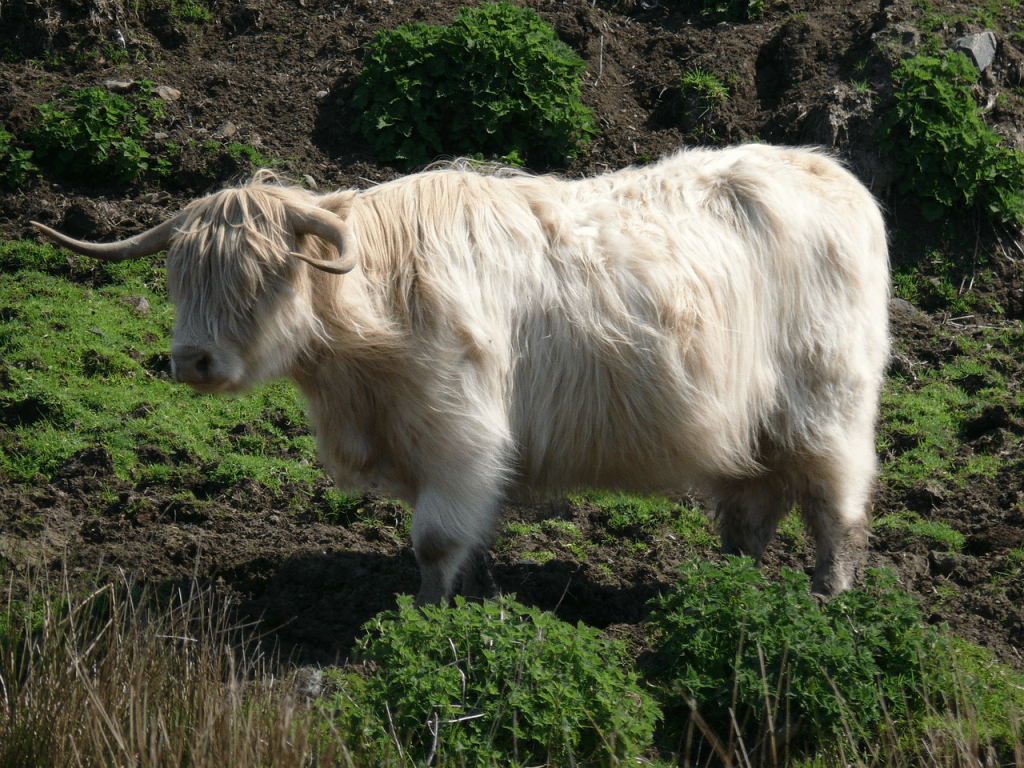
Are Highland Cows Friendly?
When people ask are Highland cows friendly, they are usually comparing them to more skittish or aggressive commercial cattle breeds. Compared to a flighty Angus or a high-strung Holstein, the Highland cow is remarkably “chill.”
This calm demeanor is not an accident; it is the result of centuries of close-quarters living. Historically, Scottish crofters often kept their cattle in their own homes during the harsh winters. This constant human contact helped select for a breed that is naturally curious about people and less prone to “fight or flight” responses.
According to the Highland Cattle USA, this breed is renowned for its intelligence and its ability to remember handlers, making them much easier to manage than more reactive breeds.
A Breed of Gentle Giants
While they are friendly, it is important to remember that “friendly” in livestock terms doesn’t always mean they want to sit in your lap. It means they are:
- Low-stress: They don’t panic easily in new environments.
- Curious: They are likely to walk up to you to see if you have treats.
- Predictable: They rarely make sudden, aggressive movements without warning.
Highland Cow Temperament Explained
To truly understand why these cows behave the way they do, we have to look at their social structure and intelligence.
Naturally Calm and Docile Nature
The Highland cow temperament is defined by a lack of aggression. They move slowly and deliberately. This “slow-motion” lifestyle is a survival trait from the Scottish Highlands, where conserving energy in the cold was vital. They aren’t in a hurry to do anything, which translates to a relaxed attitude toward humans.
Herd Behavior and Social Structure
Highlands have a very clear “pecking order.” Every fold (the name for a group of Highlands) has a dominant “Boss Cow.” While they are gentle with humans, they can be quite bossy with each other, using their horns to nudge subordinates away from the best hay. Understanding this hierarchy is key to safe handling; if you win the respect of the lead cow, the rest will usually follow.
Intelligence and Curiosity
Highland cattle are surprisingly smart. They can recognize individual humans and have been known to solve simple latches on gates. Their curiosity often outweighs their fear, which is why you will frequently find them investigating new smells or sticking their shaggy heads into open barn doors.
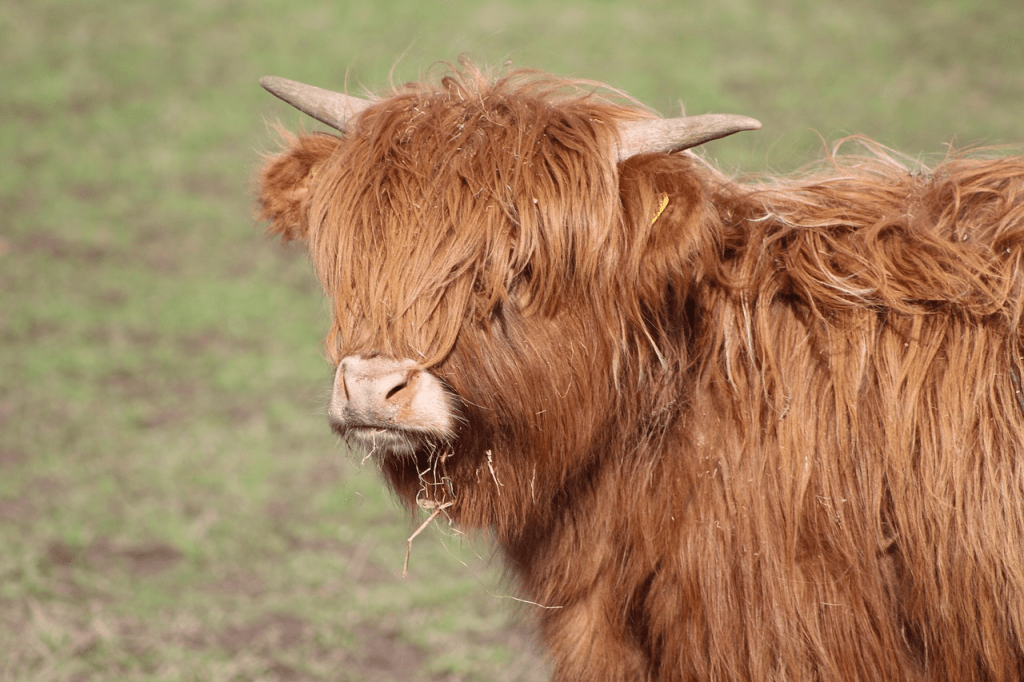
Are Highland Cows Safe Around Humans?
Generally, are Highland cows safe? Yes, they are significantly safer to be around than many other large livestock breeds. Their predictable nature makes them excellent candidates for agritourism and hobby farms.
Farm Interactions
On a working farm, Highlands are often described as “big dogs.” They can be halter-trained and even taught to come when called by name. Many owners find that their cows actively seek out head scratches and chin rubs once trust is established.
Visitors and Tourists
For tourists, Highlands are usually safe to observe from a distance, and there are many places you can find Highland cows right in the United States. However, problems arise when tourists treat them like statues. Because they are so calm, people often forget that a simple flick of a Highland’s head to shoo a fly can send a human flying if they are standing too close to those massive horns.
When Can Highland Cows Be Aggressive?
Even the gentlest breed has its limits. If you are wondering whether Highland cattle are aggressive, you need to know the specific scenarios where their “fight” instinct kicks in.
1. Mothers Protecting Calves
This is the most common cause of aggression. A Highland cow is a legendary mother. If she perceives a threat to her calf—whether that’s a barking dog or a human getting too close—she will not hesitate to charge. To understand more about the biology of these instincts, the MSD Veterinary Manual provides excellent insights into the maternal and social behaviors of cattle. Never approach a Highland calf in the field, no matter how cute it looks.
2. Bulls During Breeding Season
While Highland bulls are famously docile for their sex, they are still bulls. During breeding season, their hormones are high, and they can become territorial or unpredictable. A 1,500-pound animal doesn’t have to be “angry” to be dangerous; he just has to be determined to get to a cow in heat.
3. Poor Handling or Stress
Cattle have long memories. If a cow has been treated harshly, yelled at, or chased, it will become “flighty” or defensive. Most cases of “aggressive” Highlands can be traced back to poor handling earlier in the animal’s life. Low-stress handling techniques, such as those pioneered by Arrowquip, are essential for maintaining the breed’s natural docility.
4. Lack of Human Familiarity
Cows that have been “range-raised” without seeing humans for months will be much more wary. They aren’t necessarily mean, but they are scared, and a scared animal with horns is a dangerous Highland cow.
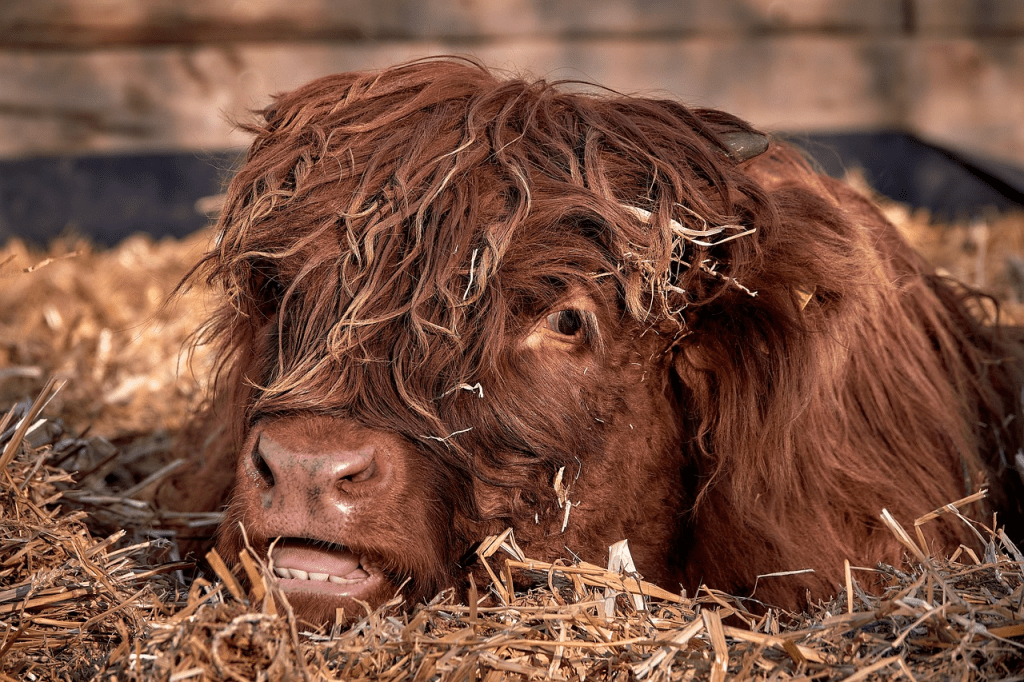
Highland Bulls vs. Cows vs. Steers
Not all Highlands are created equal when it comes to personality. Depending on the “sex” of the animal, their behavior can vary wildly.
| Animal Type | Temperament | Safety Level | Best For |
| Steer (Castrated Male) | The most “dog-like” and laid back. | Highest | Pets, “Cow Cuddling,” Beginners |
| Cow (Female) | Very gentle, but can be protective of calves. | High | Breeding, Milk, Hobby Farms |
| Heifer (Young Female) | Playful, curious, and sometimes “spunky.” | Moderate | Growing your herd |
| Bull (Intact Male) | Calm for a bull, but powerful and hormonal. | Lower | Experienced breeders only |
Are Highland Cows Good for Beginners?
If you are a first-time cattle owner, the Highland is a top-tier choice. Their temperament makes the learning curve much shallower than it would be with other breeds.
Suitability for New Owners
They are forgiving of mistakes. If you accidentally leave a gate open or take a little longer to learn how to lead them, they are unlikely to blow up in a panic. Their hardiness also means you won’t be dealing with constant health crises, which can be stressful for beginners. For those just starting out, Beef Magazine often offers resources on cattle management that can be applied to heritage breeds like the Highland.
Handling Considerations
The main hurdle for beginners is the horns. You have to learn “spatial awareness.” You must always know where those horn tips are, even when the cow is being “friendly.”
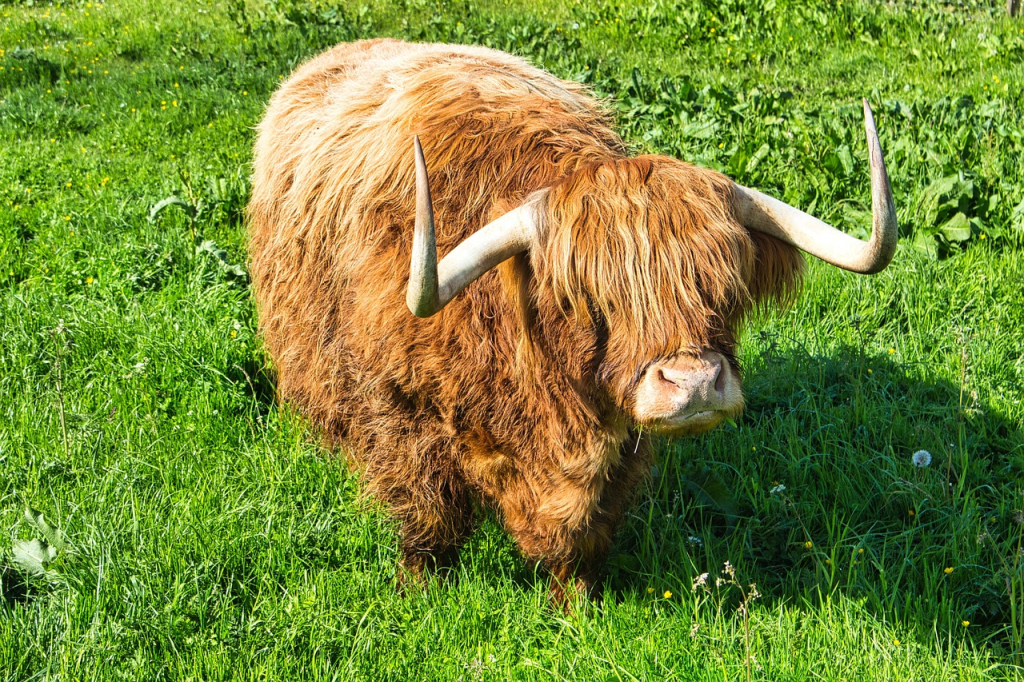
Can You Pet or Interact with Highland Cows?
The rise of “cow cuddling” has made people think every Highland is a giant teddy bear. While many can be petted, it should always be on the animal’s terms.
When It’s Safe
It is safe to interact when the animal is:
- Halter-broken: Meaning it is used to being handled by humans.
- In a controlled environment: Like a grooming chute or a small paddock.
- Initiating contact: If the cow walks up and lowers its head, it is asking for a scratch.
Respecting Boundaries
Never “corner” a cow to pet it. If they walk away, let them go. Forcing interaction is the fastest way to turn a friendly cow into a stressed, defensive one.
Tips for Safely Being Around Highland Cows
If you find yourself in a field with these shaggy beasts, follow these safety protocols:
- Keep Your Distance: Unless the owner is with you, stay at least 10–15 feet away.
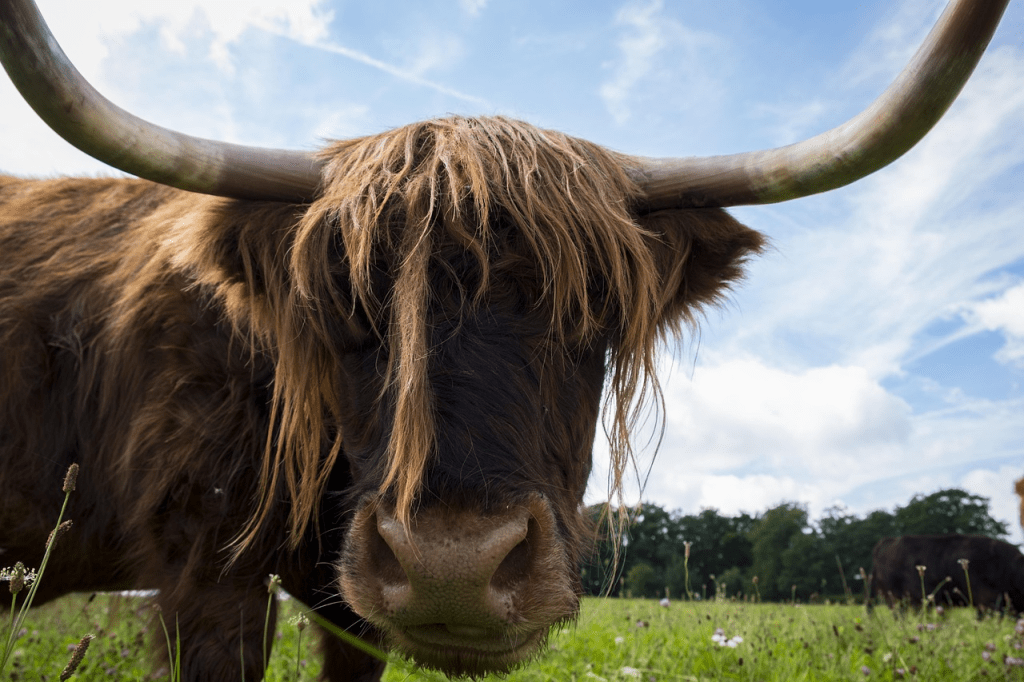
- Watch the “V” Zone: Avoid standing directly in front of their head. If they toss their head to get a fly, you are in the strike zone.
- No Sudden Movements: Move slowly and quietly. Fast movements trigger their “prey” instincts.
- Watch the Ears: If a Highland’s ears are pinned back, they are annoyed. If they are forward, they are curious.
- Avoid Corners: Never put yourself in a position where the animal could accidentally pin you against a fence or wall.
Why Highland Cows Seem So Friendly
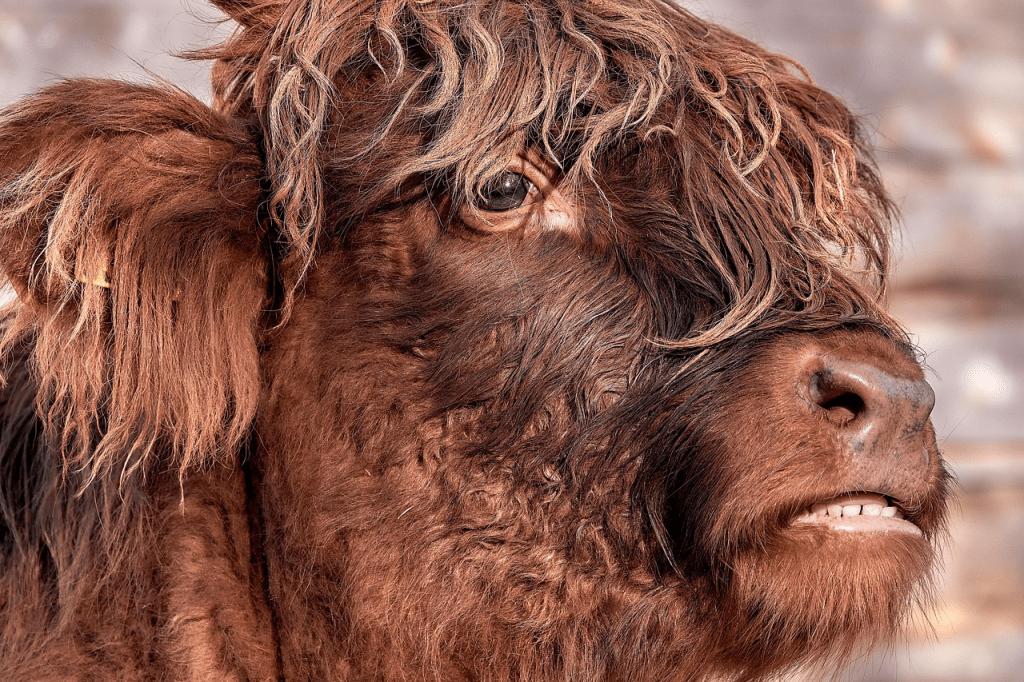
A large part of why we perceive them as friendly is their appearance. Their “fringe” (the dossan) obscures their eyes, which gives them a soft, non-threatening look. Additionally, because they are so well-insulated by their hair, they don’t feel the need to move away from rain or wind, making them appear stoic and calm.
However, never mistake “slow” for “unable.” A Highland cow can move with shocking speed if it feels it needs to protect its calf or get to a bucket of grain.
Pros and Cons of Highland Cow Temperament
| Pros | Cons |
| Extremely docile: Great for families and hobbyists. | Horn Awareness: Even a gentle nudge can be dangerous. |
| Low Stress: They handle transport and changes well. | Protective: Mothers can be very fierce. |
| Intelligent: They can be easily trained to follow routines. | Stubborn: If they don’t want to move, they won’t. |
| Quiet: They rarely bellow or cause a ruckus. | Hide Illness: Their calm nature makes it hard to see if they’re sick. |
Final Thoughts: Friendly, but Still Livestock
So, are Highland cows friendly? Absolutely. They are perhaps the most personable and relaxed cattle breed on the planet. They offer a unique opportunity for humans to connect with livestock in a way that feels more like a partnership than a chore.
But remember: they are not pets in the same way a dog is. They are powerful, horned animals that weigh half a ton. As long as you respect their space, understand their maternal instincts, and move at their pace, you will find that the Highland cow is a delightful, gentle companion for any farm or ranch.
FAQs
Are Highland cows aggressive?
Generally, no. They are one of the most docile breeds. Aggression is usually only seen in protective mothers, breeding bulls, or animals that have been mistreated.
Can Highland cows be pets?
Yes, especially steers (castrated males). They can be very affectionate and enjoy human company. However, they still require acreage, specialized fencing, and a “cow friend,” as they are herd animals.
Are Highland cows safe for families?
They are safer than most breeds, but children should never be left unsupervised with them. Their horns can accidentally cause injury during a simple head movement.
Do Highland cows attack humans?
Attacks are extremely rare and almost always involve a human getting too close to a new calf. In these cases, the cow isn’t being “mean”—she is being a good mother.
Are Highland bulls dangerous?
Highland bulls are much calmer than Angus or dairy bulls, but they should still be treated with extreme caution. They are large, powerful, and driven by hormones during breeding season.
 Fluffy Highlands