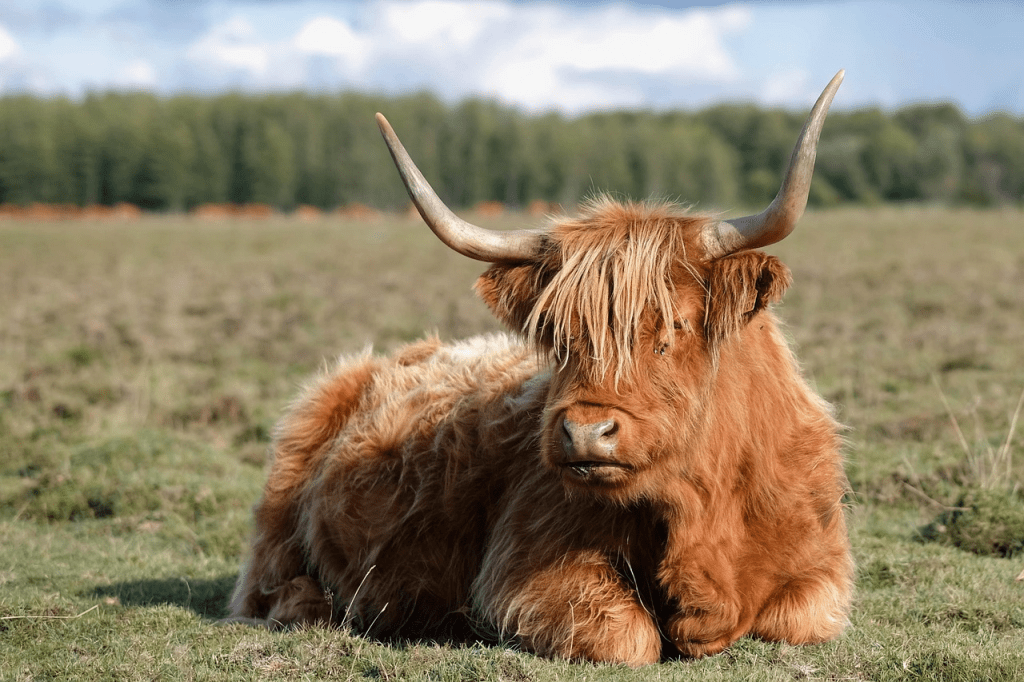
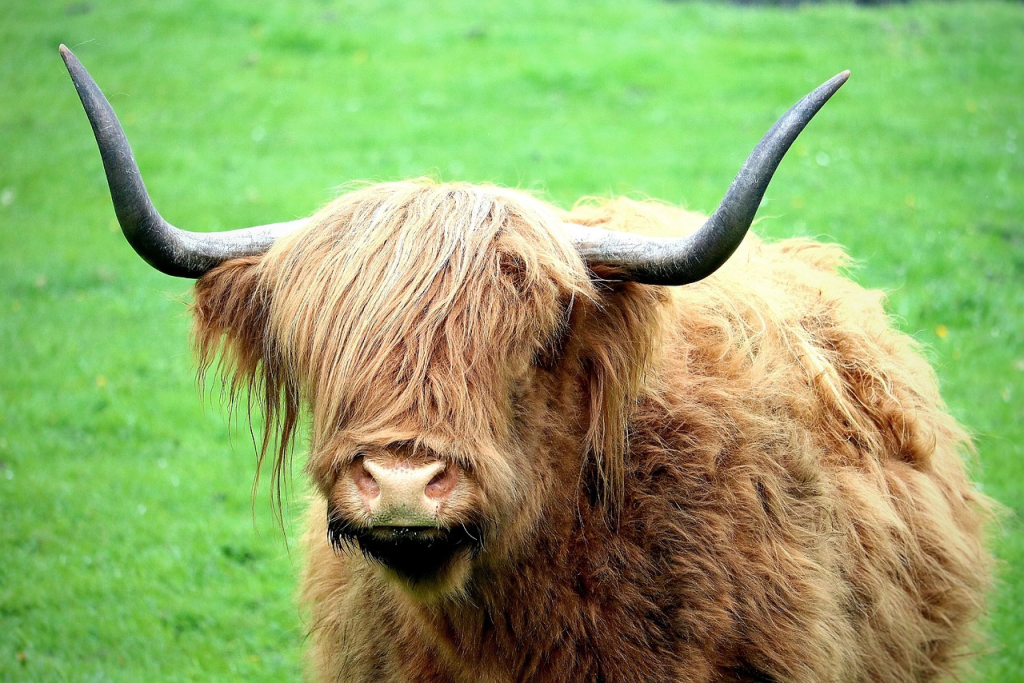
If you have ever stood in a field next to a Highland cow, your first instinct was likely that you were standing next to a prehistoric giant. Between the massive, sweeping horns and the thick, shaggy coat that adds several inches of “fluff” to their frame, they certainly cut an imposing figure.
But once you look past the hair, how big do Highland cows get in reality? Are they actually larger than the standard cows you see on a commercial dairy farm, or is it all just a clever optical illusion created by their iconic Scottish style?
To give you the short answer: a full-grown Highland cow typically stands about 3.5 to 4 feet tall at the shoulder and weighs between 900 and 1,300 pounds. Bulls are significantly larger, often reaching up to 1,800 pounds.
While they are considered a medium-sized breed, their sturdy build and impressive horns make them feel much larger than the numbers suggest. In this guide, we will break down every dimension of these gentle giants, from birth to full maturity.
How Big Do Highland Cows Get? The Direct Answer
When determining how big Highland cows get, it is important to distinguish between height and mass. Because they have shorter legs than many modern “industrial” breeds, they may appear shorter, but they are incredibly dense and muscular.
On average, a mature Highland cow (female) will weigh between 900 and 1,300 pounds (400–600 kg). A mature Highland bull (male) is much bulkier, typically weighing between 1,500 and 1,800 pounds (700–800 kg).
In terms of height, most Highlands stand between 35 and 48 inches at the shoulder. To put that in perspective for a human, a full-grown Highland cow’s back would likely reach the waist or lower chest of an average adult.
Average Size of Highland Cows: A Detailed Breakdown
To truly understand the Highland cow size, we need to look at three specific measurements: height, weight, and that very important third dimension—their horn span.
Height at the Shoulder
Highland cattle are known for having a low center of gravity. This was an evolutionary necessity for navigating the steep, rocky slopes of the Scottish Highlands without tipping over in high winds.
Most cows will reach their full height by the age of three or four. While they aren’t the tallest cattle in the world, their “blocky” rectangular shape makes them appear very sturdy and grounded.
Weight and Body Mass
The weight of Highland cattle can vary significantly based on their diet and the climate they live in. Cattle raised on lush, managed pastures will naturally weigh more than those left to forage on rugged hill ground.
Unlike commercial breeds that are bred to reach a massive weight as quickly as possible, Highlands grow slowly. This slow growth results in a different muscle structure and is one reason why their beef is so highly prized for its flavor and texture.
Horn Size: The Hidden Dimension
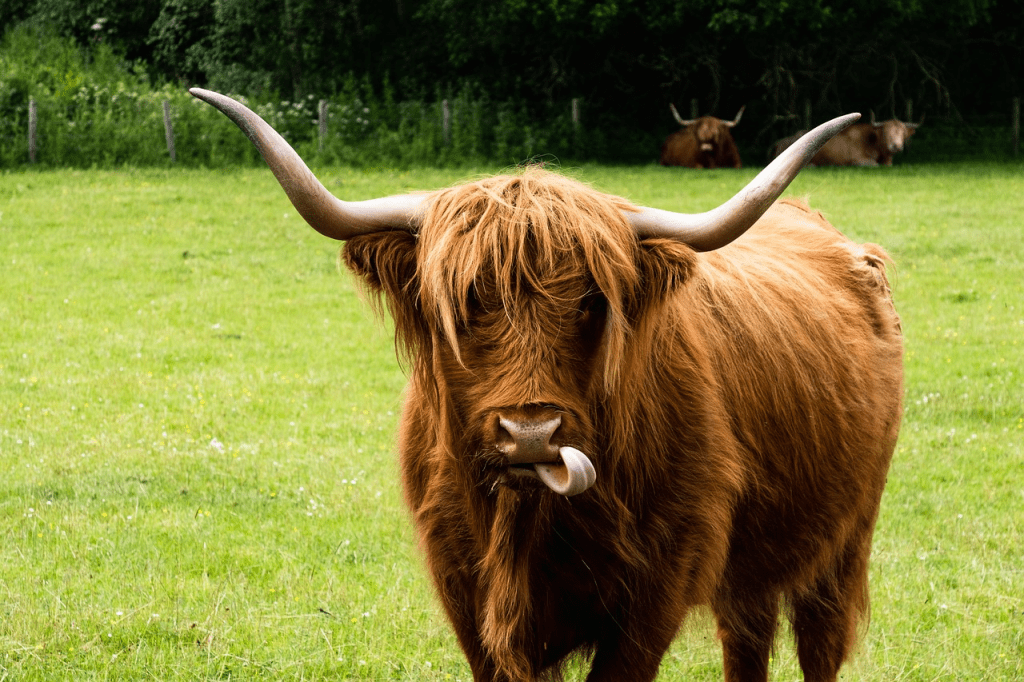
You cannot talk about how big Highland cows get without mentioning the horns. A Highland cow’s horns can have a tip-to-tip span of 3 to 4 feet.
These horns add immense visual “width” to the animal. When a cow turns her head, her physical presence effectively doubles in size. It is often the horns, rather than the body, that require owners to rethink the size of their gates and trailers.
Highland Bulls vs. Cows: Size Differences
Sexual dimorphism is quite pronounced in this breed. While a Highland cow is elegant and somewhat compact, a bull is a powerhouse of muscle and bone.
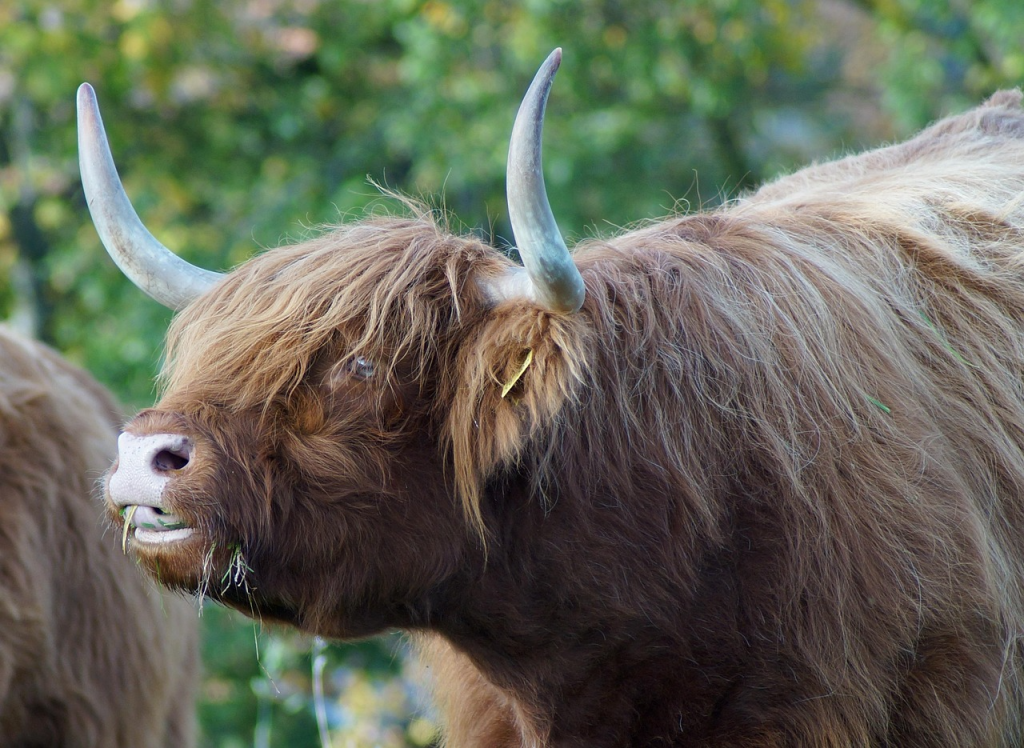
Bulls have a much thicker neck and a more pronounced “hump” of muscle over the shoulders. Their horns also grow differently—usually thicker at the base and sweeping forward rather than upward.
| Feature | Highland Cow (Female) | Highland Bull (Male) |
| Height | 35 – 42 inches | 40 – 48 inches |
| Weight | 900 – 1,300 lbs | 1,500 – 1,800 lbs |
| Build | Leaner, refined | Broad, muscular |
| Horns | Upward sweep, finer | Forward sweep, thick |
How Big Are Highland Calves?
If a full-grown Highland is a “gentle giant,” a calf is a “fluffy peanut.” Because Highland cows are famous for their ease of calving, the babies are born relatively small compared to other breeds.
At birth, a Highland calf typically weighs between 50 and 75 pounds. For comparison, a standard Holstein calf often weighs 80 to 100 pounds at birth.
Growth Stages
- The First Year: Calves grow rapidly, often doubling their birth weight in the first few months thanks to their mother’s incredibly rich, high-fat milk.
- The “Teen” Years: Between ages 1 and 3, they go through a leggy stage where they lose some of that baby fluff and start developing their adult frame.
- Full Maturity: A Highland is not considered “finished” or fully grown until about 4 or 5 years of age. This is much later than commercial breeds, which are often fully grown by age 2.
Why Highland Cows Look Bigger Than They Are
If the numbers above seem smaller than you expected, you aren’t crazy. Highland cows are masters of visual deception. There are three main reasons why they appear much larger than they actually are.
1. The Fluffy Double Coat
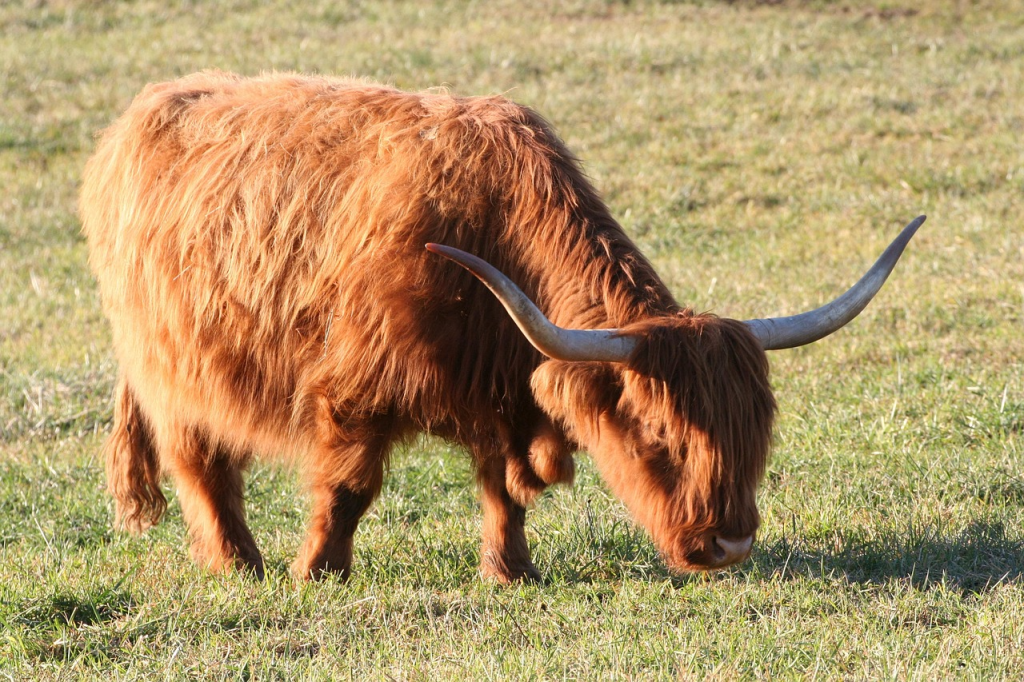
As we discussed in our article on why are Highland cows so fluffy, these animals have a massive amount of hair. This hair doesn’t just hang flat; it stands out from the body, adding 2 to 4 inches of visual “padding” around the entire animal.
2. The Low-Slung Build
Because their legs are relatively short, their bodies sit closer to the ground. This creates a solid “wall of cow” effect. When an animal has no daylight visible under its belly, it naturally looks heavier and more substantial to the human eye.
3. The Horn Span
The psychological impact of 4-foot horns cannot be overstated. We tend to judge an animal’s size by its widest point. When a Highland cow stands in a doorway, she fills the entire space, even if her actual body is much narrower than the frame.
How Do Highland Cows Compare to Other Breeds?
To truly grasp how big Highland cows get, it helps to see them side-by-side with the “standard” cows you see in the agricultural industry.
vs. Angus Cattle
Angus cows are the gold standard for American beef. They are generally taller and much heavier than Highlands. A mature Angus bull can easily top 2,000 pounds, making it a much larger physical presence in terms of raw mass.
vs. Holstein Cows
Holsteins are the classic black-and-white dairy cows. They are significantly taller than Highlands, often standing 58 inches at the shoulder. While they are taller, they are often “thinner” in appearance because they put their energy into milk rather than muscle.
| Breed | Avg. Weight (Cow) | Avg. Height | Temperament |
| Highland | 1,100 lbs | 40 inches | Very Docile |
| Angus | 1,300 lbs | 50 inches | Moderate |
| Holstein | 1,500 lbs | 58 inches | Docile/Flighty |
How Fast Do Highland Cows Grow?
One of the most important things for potential owners to understand is that Highlands are “slow burners.” In the commercial world, cattle are often sent to market at 14 to 18 months of age.
A Highland cow at 18 months is still very much a child. Because they were bred to survive on poor-quality forage in the Scottish hills, their bodies are designed for slow, steady development.
This slow growth rate of Highland cattle is actually a benefit for the meat quality. The slower a muscle grows, the more “marbling” and flavor it develops. However, for a farmer, it means you have to be patient. You won’t see their “final” size until they reach 4 or 5 years old.
Do Highland Cows Need More Space Because of Their Size?
Even though they aren’t the biggest cows in the world, their horns and their active foraging habits mean they have specific space requirements.
Land Requirements
Generally, you can keep 1 to 2 Highland cows per acre of good quality pasture. However, if the land is “marginal” (lots of brush and woods), you may need more space.
Infrastructure
While they fit in a standard field, you must consider their horns when designing:
- Gates: Should be at least 10 to 12 feet wide to allow them to turn comfortably.
- Trailers: A standard “horse trailer” is often too narrow for a Highland cow’s horns. You will likely need a wide-bodied stock trailer.
- Water Troughs: Make sure they have enough room to dip their heads in without knocking their horns against the edges.
According to the Highland Cattle Society, providing adequate “swing room” is the most overlooked part of managing this breed’s size.
Fun Facts About Highland Cow Size
- The Largest “Small” Breed: Many people mistake Highlands for “miniature” cattle because of their height, but their weight proves they are full-sized livestock.
- Horn Growth Never Stops: A Highland cow’s horns will continue to grow (albeit slowly) throughout her entire life.
- Winter Bulk: A Highland cow will actually look “bigger” in February than in August because their winter coat is at its maximum thickness.
- Miniature Highlands: There is a specific “miniature” version of the breed that is bred to be under 42 inches tall at maturity.
- Efficiency: Pound for pound, Highlands are one of the most efficient breeds at turning poor grass into body mass.
Final Thoughts: Respect the Size
So, how big do Highland cows get? They get big enough to be a serious livestock animal, but small enough to be manageable for hobby farmers.
They are the perfect middle-ground breed: sturdy, hardy, and imposing, yet incredibly gentle. While their hair and horns make them look like monsters from an ancient myth, they are really just medium-sized, slow-growing cattle that have mastered the art of looking majestic.
If you are thinking about owning one, just remember to measure your gates twice—because those horns aren’t getting any smaller!
For more on their history and why they are so unique, check out our What Are Highland Cows post.
FAQs
Are Highland cows bigger than regular cows?
Generally, no. They are shorter and lighter than common commercial breeds like Angus or Holstein. However, their hair and horns make them appear much larger.
How tall is a full-grown Highland cow?
A mature female usually stands between 36 and 42 inches at the shoulder.
How much do Highland bulls weigh?
A full-grown bull typically weighs between 1,500 and 1,800 pounds, though some can reach 2,000 pounds in ideal conditions.
Do Highland cows grow slowly?
Yes. They reach full maturity at around 4 to 5 years old, whereas many commercial breeds reach full size by age 2.
Can they fit in a standard cattle squeeze?
Most standard “squeeze chutes” used by vets are too narrow for Highland horns. Owners usually need to use a specialized “Highland head gate” or a walk-through system.
 Fluffy Highlands